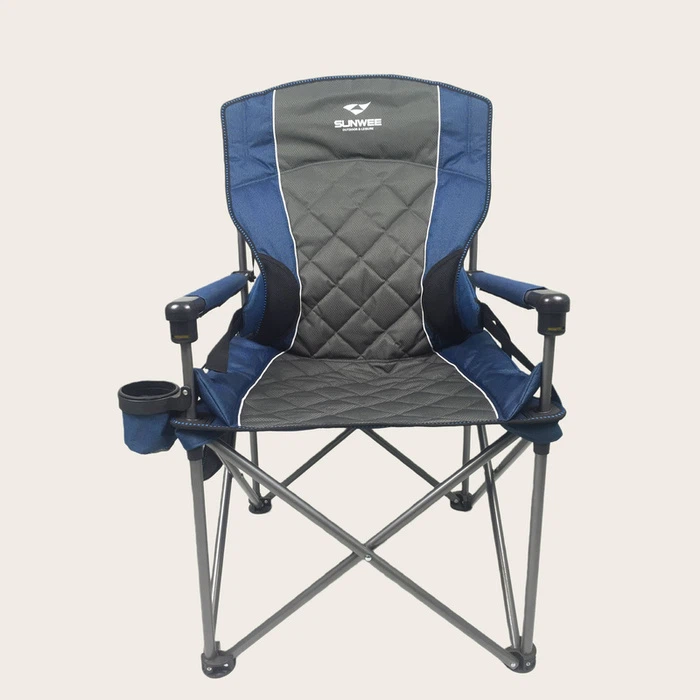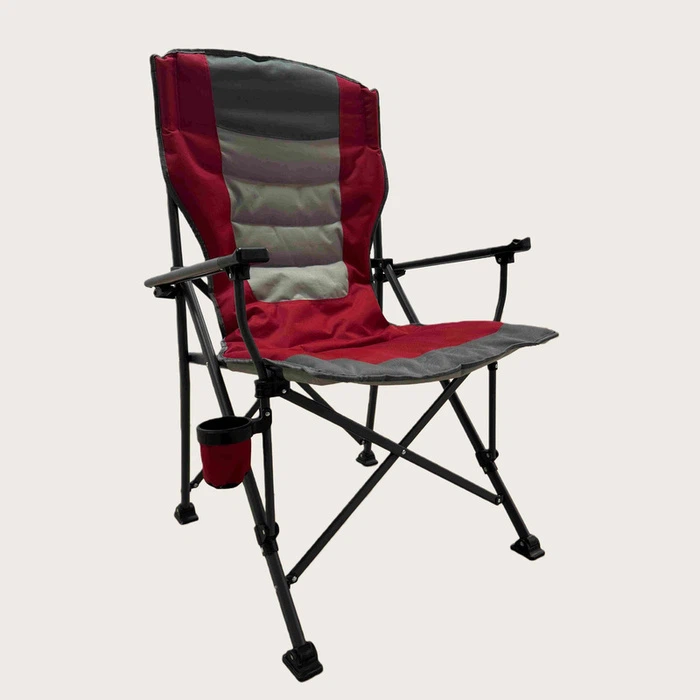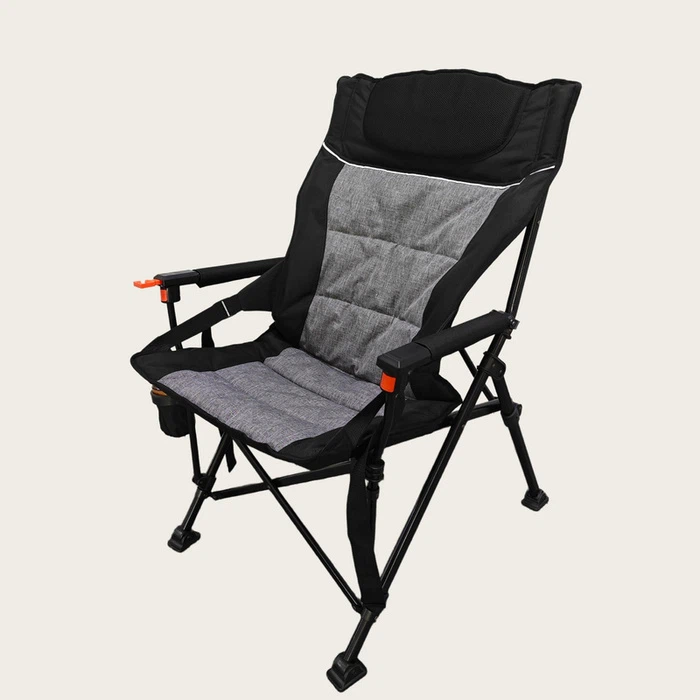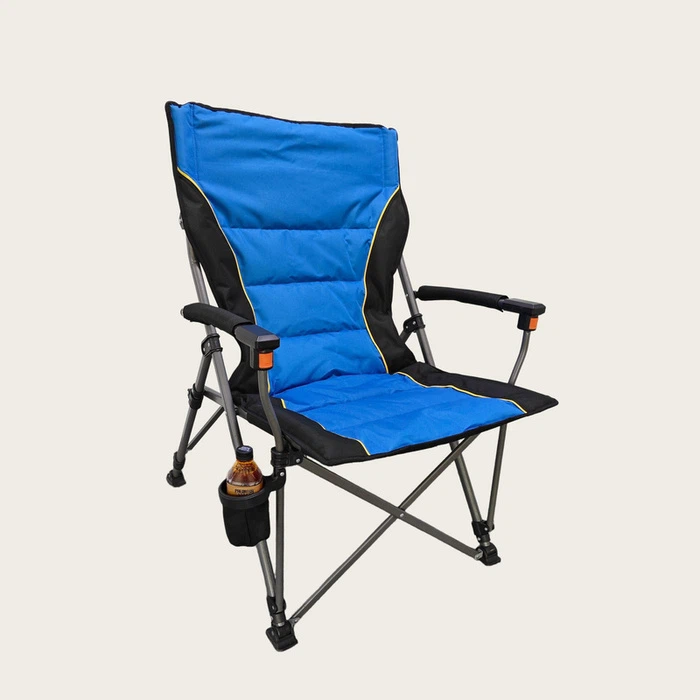
The outdoor camping furniture trends 2026 landscape across Europe and Australia is being reshaped by two powerful, sustained demand vectors: the rapid expansion of caravan and motorhome culture on the continent, and Australia's entrenched camping lifestyle that now accounts for over 60 million domestic camping nights annually. For procurement directors at retail chains and distribution companies, this means one thing - the buying window for camping furniture wholesale orders is shifting earlier in the calendar, and SKU assortment strategies need to account for three distinct consumer segments simultaneously.
As a camping furniture manufacturer with a BSCI-audited facility producing 2 million+ units annually since 1997, Sunwee Outdoor has tracked these shifts through direct OEM partnerships with major European outdoor retailers and Australian hardware chains. This article breaks down what's moving off containers in 2026 - and how to build your catalog accordingly.
Caravan and Motorhome Culture in Europe: The Primary Demand Driver
Europe's caravan industry produced 265,000 units in 2024, with Germany, France, and the Netherlands accounting for 60% of new registrations. Every unit that rolls off a production line in Ulm or Angers creates a downstream demand for compact, foldable outdoor furniture. The average European caravan owner purchases 3–5 pieces of camping furniture within the first year of ownership - typically a chair, a table, and a storage solution.
This is not seasonal impulse buying. It is planned, repeat procurement. Retailers in the DACH region and Benelux report that camping furniture attachment rates at point-of-sale have risen from 18% in 2020 to 34% in 2025. The product requirements are specific:
- Weight capacity minimum 120kg - European consumers expect chairs to hold two adults
- Folded dimensions under 70cm - storage inside caravan lockers is constrained
- Powder-coated rust-resistant finish - coastal camping in Croatia and southern France demands salt-air durability
Australia's Caravan Camping Boom: Volume and Seasonality
Australia's domestic tourism market saw 62.4 million camping nights in 2024, up 14% from pre-pandemic levels. The key difference from Europe: Australian buyers prioritize heat resistance and UV stability in fabric selection. 600D Oxford fabric with PU coating and UPF 50+ treatment is the baseline specification for the Australian market. Chairs that fade or degrade after one summer on the beach are returned at scale.
Australian retailers also operate on an inverted season. Peak ordering for camping furniture runs from August through November - six months ahead of the European spring buying window. A camping furniture supplier that can accommodate staggered production runs across both hemispheres provides genuine supply-chain advantage.

The Shift from Single Chairs to Full Camping Furniture Sets
Five years ago, the average European outdoor retailer ordered camping chairs as a standalone category. In 2026, the dominant order pattern is the full camping furniture set: one chair + one table + one storage cupboard + one cot per family unit. This shift is driven by two factors:
Retail display efficiency - retailers can merchandise a complete "camping setup" at a higher average order value (AOV)
Consumer convenience - buyers prefer matching aesthetics and consistent build quality across all pieces
The SKU implications are significant. Retailers who previously carried 8–12 chair SKUs now need 30–50 SKUs spanning chairs, tables, cupboards, and cots. This is where sourcing from a single camping furniture manufacturer with multi-category production capability becomes operationally critical. Consolidating suppliers reduces container costs, simplifies quality control, and shortens lead times.
Family Camping Drives Growth in Tables, Cupboards, and Cots
The family camping segment is the fastest-growing category across both markets. Unlike solo or couple campers, families require:
- Camping tables with stable, wind-resistant legs and a minimum 60×60cm surface area
- Camping cupboards with waterproof PVC liner bags and reinforced door hinges for kitchen storage
- Camping cots with weight capacity of 150kg+ and elevated sleeping height to avoid ground moisture
| Product Category | Target Weight Capacity | Frame Material | Fabric Specification | Folded Length | Typical MOQ |
|---|---|---|---|---|---|
| Camping Chair | 120–150kg | 7075 aluminum alloy or 22mm steel tube | 600D Oxford with PU coating | 60–70cm | 500 units |
| Camping Table | 30kg surface load | 22mm powder-coated steel | N/A (mesh or aluminum top) | 70–80cm | 300 units |
| Camping Cupboard | 25kg shelf capacity | 22mm steel tube frame | 600D Oxford + PVC waterproof liner | 65cm | 300 units |
| Camping Cot | 150–200kg | 25mm reinforced steel tube | 600D Oxford or polyester mesh | 80–90cm | 300 units |

Three Parallel Product Lines: Heavy-Duty, Comfort, and Lightweight
The 2026 market is not converging on a single product archetype. Instead, three distinct product lines are growing in parallel, each targeting a different consumer profile:
1. Heavy-Duty / High Weight Capacity - Target: Australian outback campers, European motorhome owners. Frame: 25mm+ steel tubing with powder-coated finish. Weight capacity: 150kg+. Fabric: 600D Oxford or heavier. These products prioritize durability over portability.
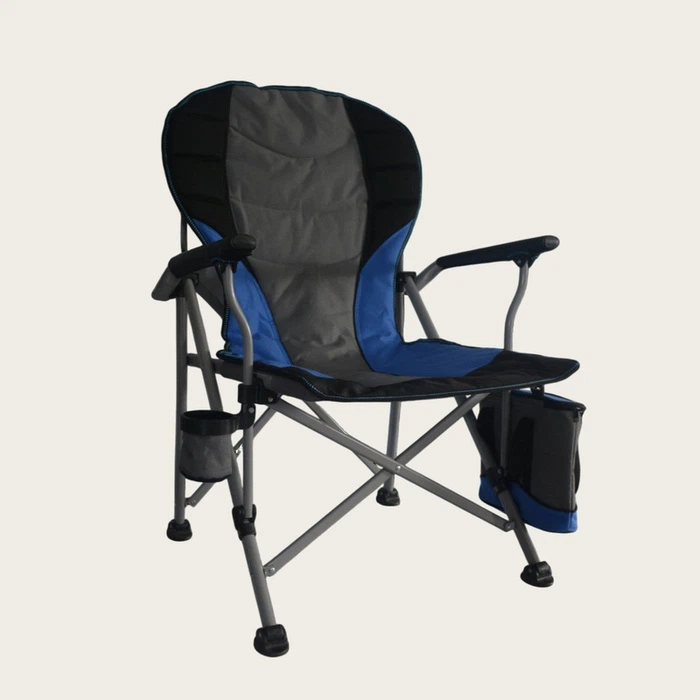
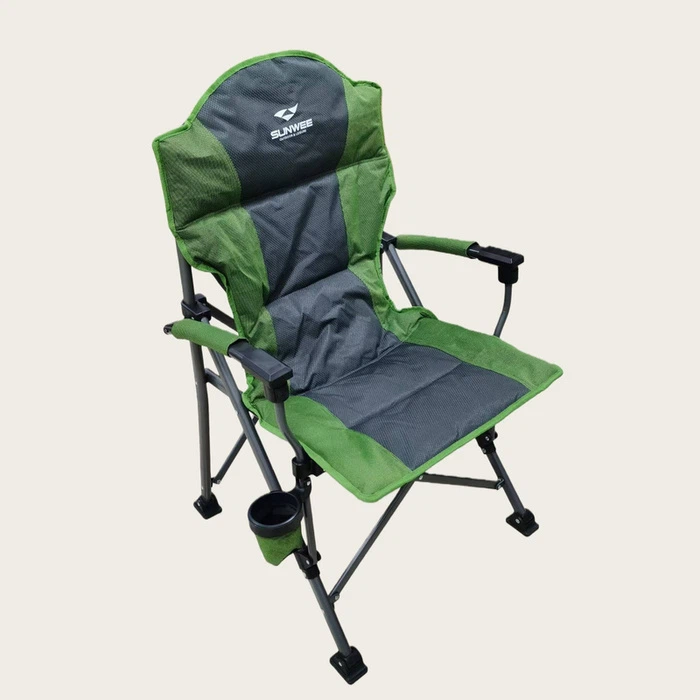
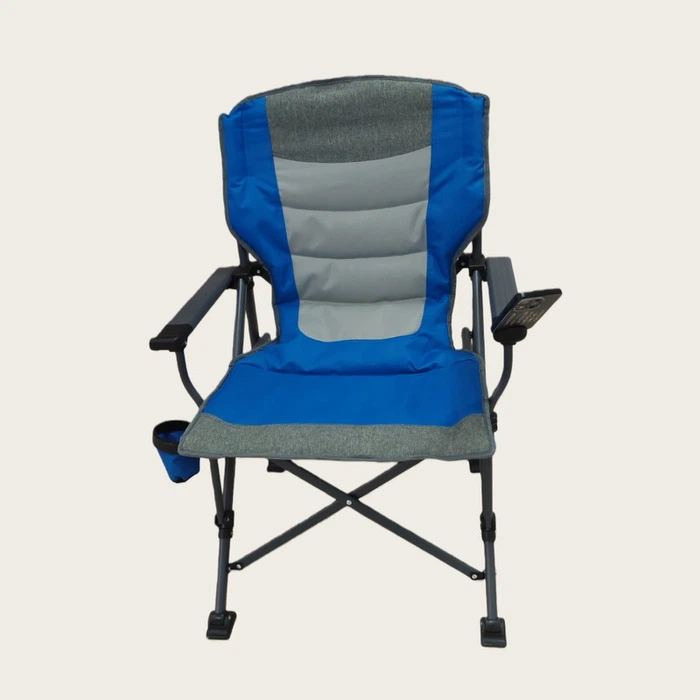
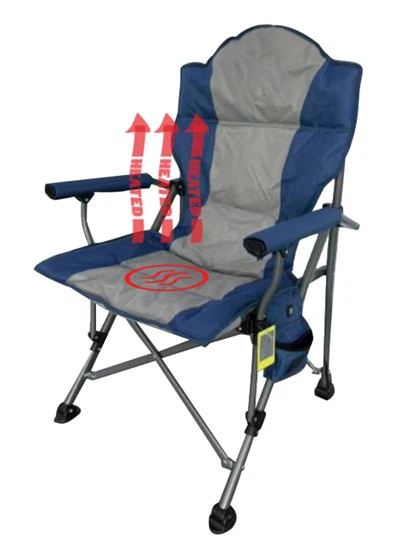
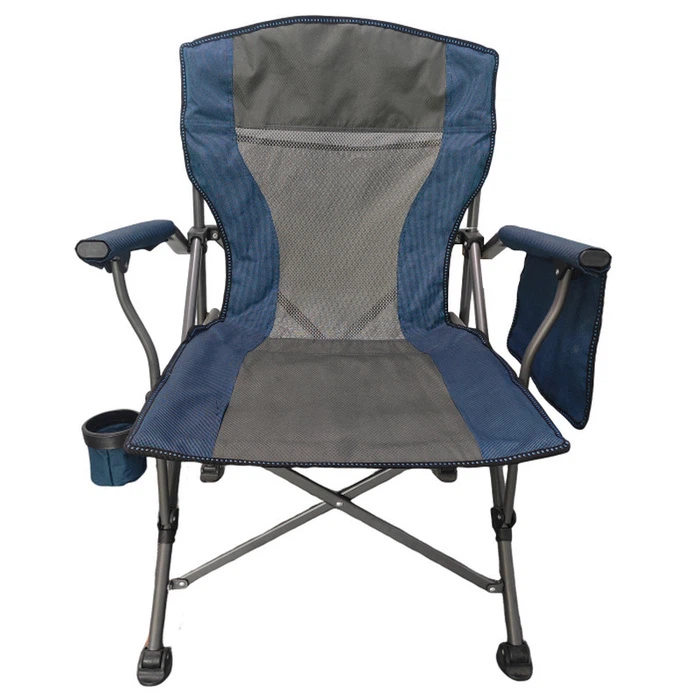
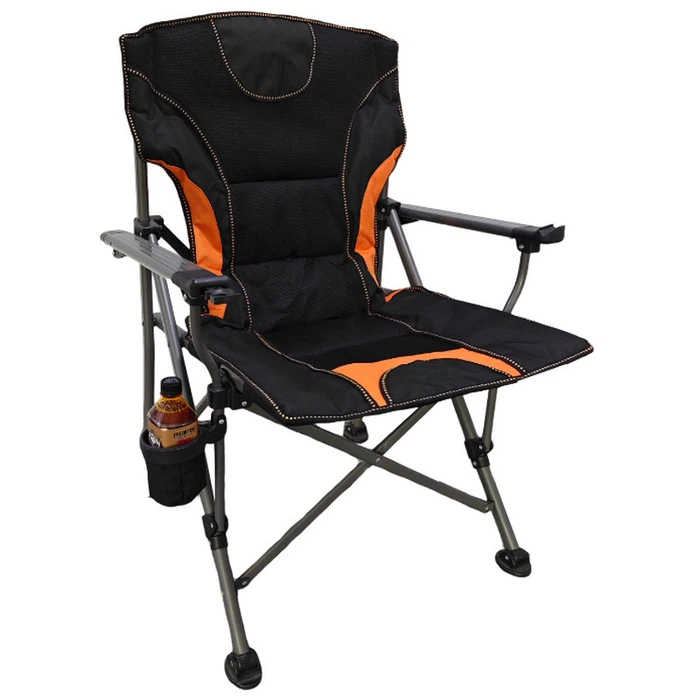
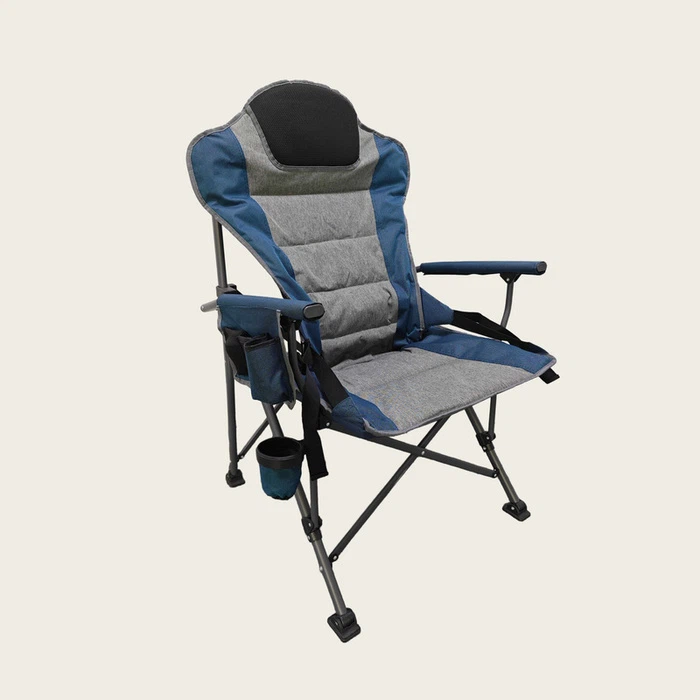
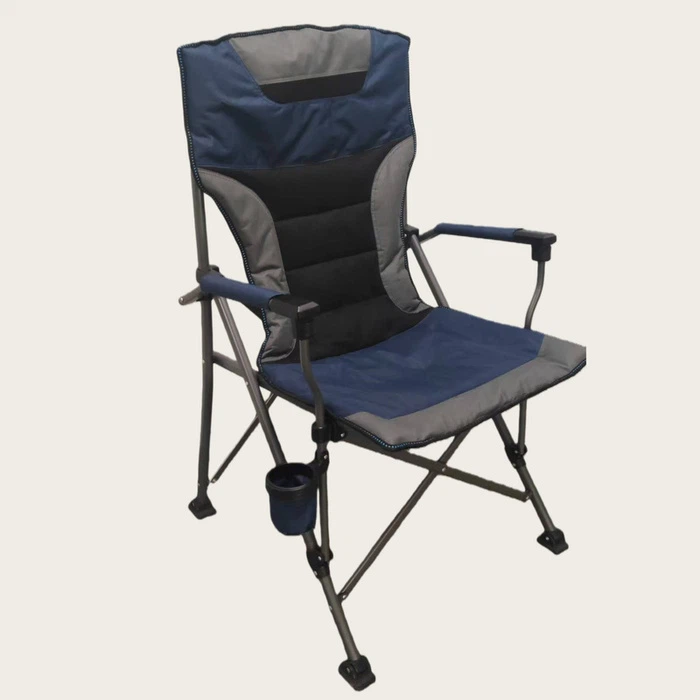
2. Comfort-Focused / Ergonomic Design - Target: Family campers, extended-stay users. Features: Reclining backrests (multiple position settings), armrests with cup holders, lumbar support padding, elevated seat height. Frame: 22mm steel or 7075 aluminum alloy. These products command a 20–35% price premium over standard models.
3. Lightweight / Ultralight - Target: backpackers, cycle-tourists, weight-conscious campers. Frame: 7075 aluminum alloy with thin-wall tubing. Weight: under 1.5kg per chair. Fabric: 210D–420D ripstop nylon. These products fill the gap between traditional camping gear and ultralight backpacking equipment.
A well-structured retail catalog should carry all three lines. The heavy-duty line drives volume and margin; the comfort line drives premium positioning; the lightweight line captures the growing adventure-sports crossover segment.
How Importers Should Plan Their 2026 SKU Assortment
Based on production data from Sunwee's OEM partners, the following SKU allocation has proven optimal for mid-to-large outdoor retailers:
| Market Segment | Chairs (%) | Tables (%) | Cupboards (%) | Cots (%) | Avg. Container Mix |
|---|---|---|---|---|---|
| European Caravan | 45% | 25% | 20% | 10% | 1×40HQ: 8,000–12,000 units |
| Australian Family | 35% | 30% | 20% | 15% | 1×40HQ: 7,000–10,000 units |
| Lightweight / Adventure | 60% | 20% | 10% | 10% | 1×40HQ: 10,000–15,000 units |
Lead time planning is equally critical. For the European spring season (March–May delivery), production should be scheduled for January–February completion. For the Australian summer season (November–January delivery), production should target August–September. A camping furniture supplier with a BSCI-audited facility and 200,000+ sqm production capacity can accommodate both windows without quality degradation.
Multi-Category Sourcing: Why Consolidation Matters
Retailers sourcing chairs from one factory, tables from another, and cupboards from a third face compounding inefficiencies:
Multiple container shipments - higher per-unit freight costs
Inconsistent quality standards - different factories use different frame gauges, fabric grades, and stitching specifications
Extended lead times - coordinating deliveries from multiple suppliers adds 4–8 weeks to the procurement cycle
Fragmented after-sales support - warranty claims and replacement parts require managing multiple vendor relationships
Sunwee Outdoor's production facility manufactures the complete range - camping chairs, camping tables, camping cupboards, and camping cots - under one roof. This enables single-container mixed-SKU shipments, unified quality control protocols, and a single point of contact for OEM/ODM development.

Explore the Full Range
Browse our complete catalog of other camp furniture options, including camping tables with mesh and aluminum tops, camping cupboards with waterproof liners, and camping cots rated up to 200kg. For the latest product developments, check our new designs collection updated quarterly with OEM-exclusive models.
FAQ
Q: What is the minimum order quantity for a mixed-SKU container with chairs, tables, and cupboards?
A: Sunwee accepts mixed-SKU orders starting at 500 units per product category within a single 40HQ container. This allows retailers to test multiple product lines while maintaining competitive per-unit pricing. Full container loading typically accommodates 8,000–12,000 units depending on product dimensions.
Q: Can the 600D Oxford fabric used on Sunwee camping furniture meet European REACH and Australian UV standards simultaneously?
A: Yes. Sunwee's standard 600D Oxford fabric with PU coating is tested for REACH compliance (EU Regulation EC 1907/2006) and achieves UPF 50+ rating per AS/NZS 4399:2017. The same fabric specification serves both markets without modification, simplifying procurement for retailers operating across regions.
Q: What frame material should I choose for the Australian market - steel or 7075 aluminum alloy?
A: For heavy-duty and comfort-focused product lines targeting Australian caravan owners, 22–25mm powder-coated steel tubing provides the best cost-to-weight-capacity ratio (120–150kg capacity). For the lightweight segment, 7075 aluminum alloy reduces chair weight to under 1.5kg while maintaining 100kg capacity. Sunwee produces both and can recommend based on your price positioning.
Request our 2026 Sunwee Outdoor Furniture Cat