The Impact of High UV and Extreme Heat on Bulk Camping Furniture
Procurement directors and brand managers distributing to regions like the Middle East, Australia, and South Africa face severe product failure risks if materials are not engineered for extreme environmental degradation. High UV radiation combined with sustained ambient temperatures above 40°C accelerates polymer degradation and fabric tensile strength loss.
For an import distributor, selecting a standard custom camping chair manufacturer without rigorous specialized testing leads to catastrophic structural failures. In high-heat zones, non-treated fabrics fade within weeks, synthetic armrests become brittle and crack under load, and structural coatings bubble or peel, leading to localized rust.
To mitigate product recalls and protect brand equity, global B2B buyers must analyze raw material specifications down to the molecular level. This guide outlines the exact technical standards required to engineer outdoor furniture that survives the harshest desert and tropical climates.
Technical Specifications for High-Climate Fabrics and Components
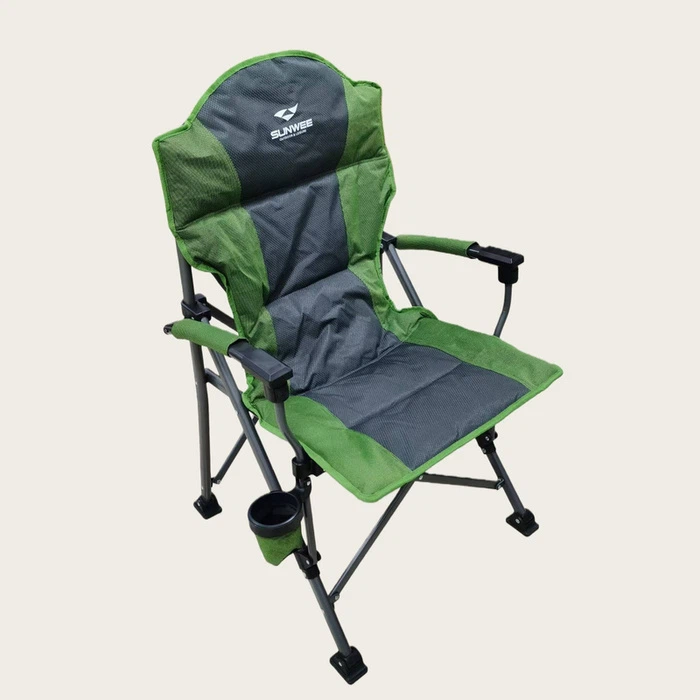
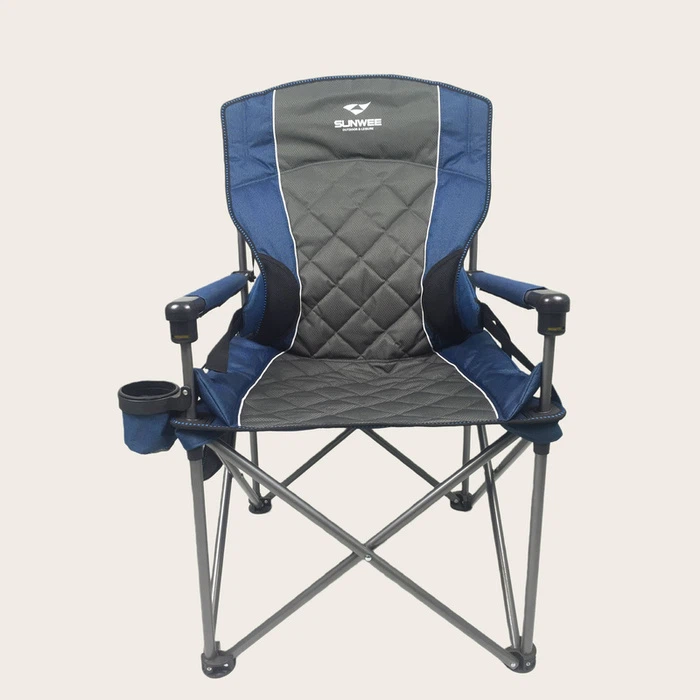
Fabric selection dictates the operational lifecycle of a uv resistant camping chair. Standard polyester degrades swiftly under intense sunlight. For heavy-duty hot climate deployment, Sunwee utilizes high-density 600D Oxford fabric and textilene meshes treated with hindered amine light stabilizers (HALS).
Fabric Color Fastness and Degradation Limits
Color fading is the first visible sign of polymer breakdown. The industry benchmark for high-radiation regions is AATCC 16.3 Colorfastness to Light, where materials must achieve a Grade 4 rating after at least 100 continuous hours of exposure.
Thread selection is equally critical. Sunwee utilizes UV-bonded polymer threads for all stress points. Standard nylon thread rots quickly under UV exposure, causing seam slippage even if the main fabric remains intact.
Component-Level Material Requirements
Beyond the fabric, structural plastic joints and armrests are highly vulnerable. Unstabilized Polypropylene (PP) and Nylon-6 components dry out and crack under intense thermal load. Sunwee integrates a minimum of 3% UV stabilizer masterbatch (UV-326/UV-329) into all load-bearing plastic brackets.
|
Component / Material Category |
Standard Material (Low UV Risk) |
High-Climate Specification (Sunwee Standard) |
Technical Testing Metric |
|
Main Seating Fabric |
Standard 600D Polyester |
600D Oxford Fabric with Dual UV Coating & HALS |
ISO 105-B02 Grade 4-5 |
|
Sewing Thread |
Standard Filament Nylon |
UV-Bonded Multi-strand Polyester |
ASTM D2256 Tensile Retention > 85% |
|
Plastic Joints / Connectors |
Recycled Polypropylene |
100% Virgin Nylon-6 + 3% UV Masterbatch |
ASTM D256 Impact Strength Retention |
|
Armrest Elements |
Single-layer Foam Wrap |
High-Density HDPE or UV-Treated Hard Armrest |
Shore D Hardness Stability Test |
Metallurgy and Coating Standards for Hot Climate Frameworks
The structural integrity of outdoor furniture for hot climate regions depends on frame metallurgy and surface treatment. High ambient heat alters surface expansion rates, meaning low-tier powder coatings crack and flake off, leaving the underlying metal vulnerable to oxidation.
Aluminum Alloy vs. Treated Steel Frame Performance
For optimal durability, Sunwee engineers premium frames using structural 7075 aluminum alloy frame tubing or heavy-wall Q195/Q235 steel. Aluminum offers natural oxide protection and superior thermal dissipation, making it cooler to the touch in direct sunlight.
Advanced Powder Coating Processes
To guarantee rust prevention in high-humidity or coastal desert zones, steel tubing must undergo a multi-stage pretreatment process. Sunwee employs an automated zinc phosphating line before applying an electrostatically charged, anti-UV polyurethane powder coat. The finish is baked at 200°C to form a cross-linked protective barrier that passes a 500-hour salt spray test (ASTM B117).
Structural Engineering for Sand and Dust Environments
Hot climate markets are frequently plagued by fine sand particles and dust storms. Standard folding mechanics often jam when particulates enter moving joints, leading to frame bending when users force the chair open or closed.
Tolerances and Internal Bushing Designs
Our engineering team utilizes tight-tolerance joint spacing combined with internal self-lubricating Delrin washers. This ensures that sand cannot easily penetrate the friction points between the rivet and the frame tube, guaranteeing fluid movement after years of desert deployment.
Mud Feet and Base Stability
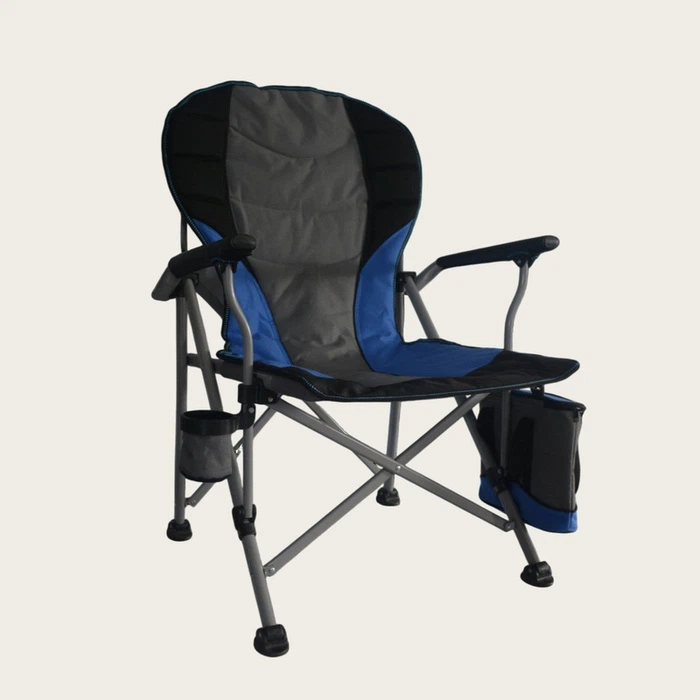
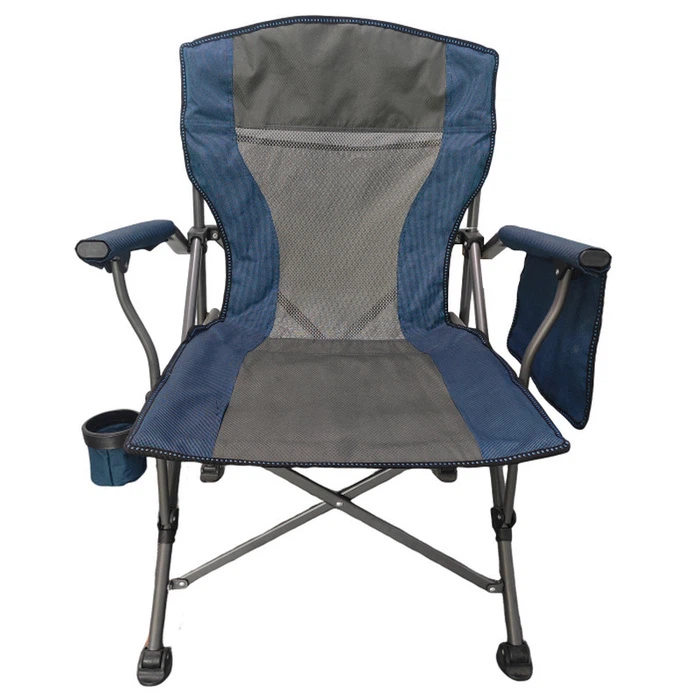
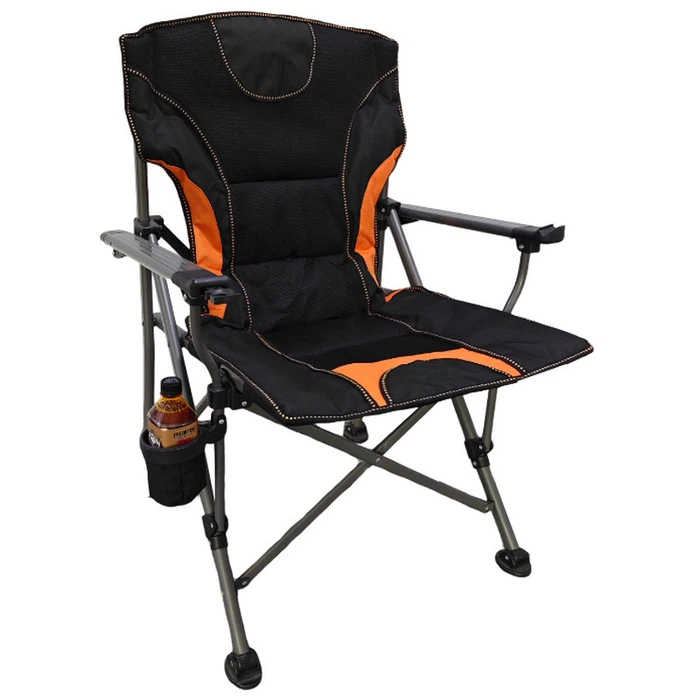
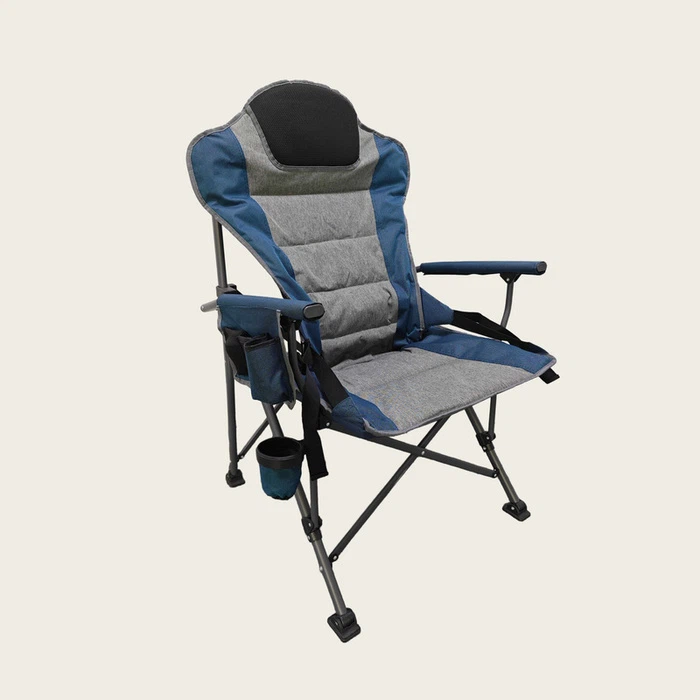
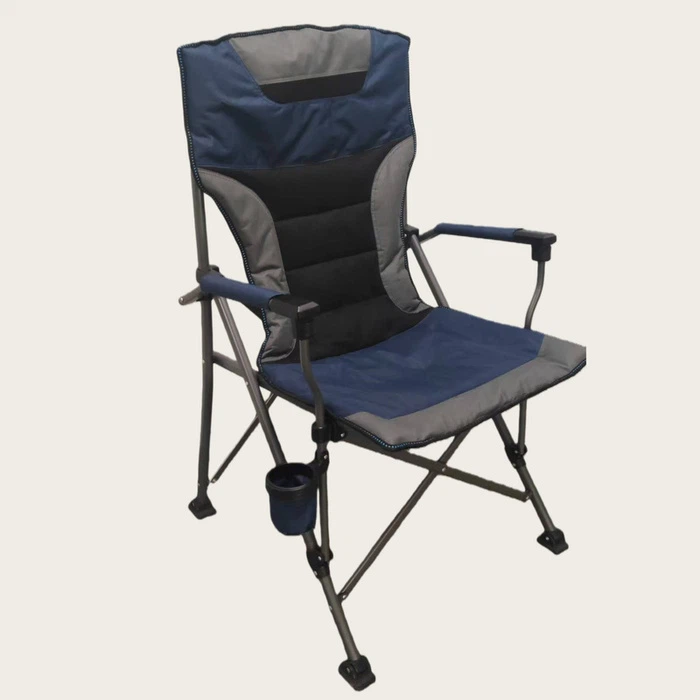
To prevent the furniture from sinking into soft desert sand or dry beach terrain, heavy-duty configurations require oversized, pivoting molded feet. Sunwee's specialized sand feet distribute load evenly, preventing stress concentration on a single corner of the frame. For bulk procurement options featuring these reinforced configurations, buyers can explore our dedicated Heavy Duty Armchair and Beach Chairs lines.
Market-Specific Product Development for the Middle East, Australia, and South Africa
A professional OEM camping furniture factory must adapt product dimensions and specifications to regional consumer habits and physical profiles.
Middle East Market: Oversized Comfort and Extended Lifecycles
The GCC market demands high weight capacities and deep seating profiles. Large-scale family camping and desert gatherings mean furniture is utilized for extended hours. Frameworks must support a weight capacity 300lbs minimum, utilizing reinforced double-layer fabric backing.
Australia and South Africa: High-UV Mobile Overlanding
The Australian Outback and South African bush require extreme transport durability. Overlanding vehicles vibrate intensely across corrugated dirt tracks. Thus, custom camping gear must feature robust, heavy-duty carry bags made from water-resistant, dust-proof 600D material with reinforced compression straps.
Our dedicated OEM & ODM Service department assists brands in configuring exact structural dimensions, custom fabric colorways, and bespoke branding solutions tailored to these regional environmental pressures. Every project is backed by our internal R & D group and verified via our strict Quality Control department, operating inside our BSCI audited facility.
High-Climate Product Specifications & Loading Capacities
|
Model Reference |
Fabric Construction |
Frame Specification |
Folded Dimensions (cm) |
Loading Capacity (40' HQ) |
|
Sunwee Desert-Max Chair |
600D Oxford + HALS |
22mm x 1.0mm Powder-Coated Steel |
25 x 22 x 95 |
3,200 pcs |
|
Sunwee Safari Low-Lounger |
600D Polyester Mesh |
19mm x 1.2mm 7075 Aluminum |
18 x 15 x 75 |
4,500 pcs |
|
Sunwee Oasis Folding Table |
UV-Stabilized HDPE Top |
25mm Aluminum Cross-Brace |
60 x 60 x 6 |
2,100 pcs |
Trait-Based Dynamic FAQ
Q: How does Sunwee ensure the fabric color does not fade under Middle Eastern UV radiation?
A: We integrate specialized Hindered Amine Light Stabilizers (HALS) into the polyurethane coating of our 600D Oxford fabric. Samples from every production batch undergo accelerated weathering inside our QUV chambers, ensuring compliance with ISO 105-B02 Grade 4 colorfastness standards before mass cutting.
Q: What specific modifications prevent your chair joints from cracking in 45°C ambient temperatures?
A: We replace standard recycled plastics with 100% virgin Nylon-6 matrix blocks infused with 3% UV-326 masterbatch additives. This specific chemical composition prevents the thermal cross-linking breakdown and dry-embrittlement common in standard polymer brackets when exposed to high-heat climates.
Q: Do the steel frames used in your hot-climate furniture suffer from internal rust if exposed to coastal humidity?
A: No. All steel tubing passes through an automated 7-stage immersion zinc-phosphating wash line to remove impurities and create a corrosion-resistant substrate layer. We then apply an anti-UV polyester powder finish baked at 200°C, certified to survive a 500-hour salt spray test without blistering.