The Shift Toward Sustainable Camping Furniture in the Global Market

The global outdoor leisure market is undergoing a structural transition. Mass-market retail buyers, professional sourcing directors, and category managers from Europe and North America are no longer evaluating outdoor gear solely on unit cost. Environmental compliance, circularity, and long-term durability have become primary metrics in vendor evaluation. For any established outdoor furniture manufacturer, aligning with sustainable camping furniture trends is no longer a marketing option-it is a critical regulatory and commercial requirement.
According to recent European consumer trend reports and global supply chain data, over 68% of outdoor enthusiasts prefer purchasing from brands that provide clear traceability and certified low-carbon manufacturing. This consumer pressure flows directly up the supply chain. Retailers must secure partnerships with manufacturing partners who can prove their environmental credentials through physical testing, material certifications, and audited factory operations.
Why Extreme Durability is the Purest Form of Sustainability

In the outdoor furniture industry, the most effective way to reduce the environmental footprint of a product is to extend its operational lifecycle. A cheap, poorly engineered camping chair that failures after a single season contributes directly to landfill waste and doubles the carbon footprint of transport and raw material extraction over a two-year period. By contrast, sourcing from a dedicated durable camping chair supplier ensures that products remain functional for years, drastically reducing the total lifecycle impact.
For high-volume retail buyers, durability translates directly to a lower return rate, fewer quality claims, and enhanced brand equity. High-quality manufacturing standards rely on specific structural parameters to ensure longevity:
- Wall Thickness of Frame Tubing: Using 1.0mm to 1.2mm wall thickness steel or aluminum tubing instead of industry-standard 0.8mm prevents structural buckling under dynamic loads.
- Fabric Tensile Strength: Utilizing high-denier polyester or nylon with reinforced weave structures prevents tearing at critical stress joints.
- Connection Point Engineering: Substituting plastic rivets with high-tensile steel rivets and reinforcing structural brackets with molded nylon washers ensures long-term folding cycle reliability.
Material Engineering: How Fabric, Steel, Aluminum, and Packaging Impact Eco-Credentials
To systematically evaluate the sustainability of outdoor furniture, procurement teams must analyze the four primary components of product construction: textile covers, metal frames, finishing coatings, and protective packaging.
1. Fabrics: Denier Count, Coatings, and Recycled Materials
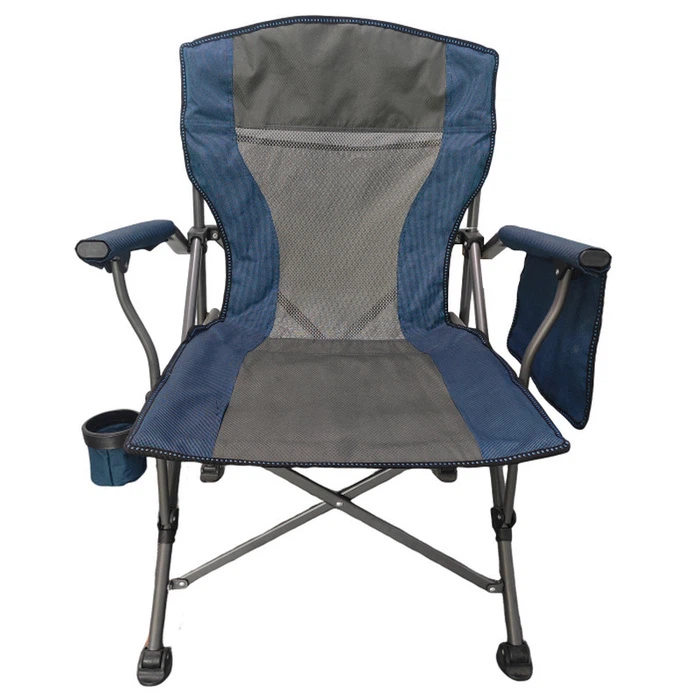
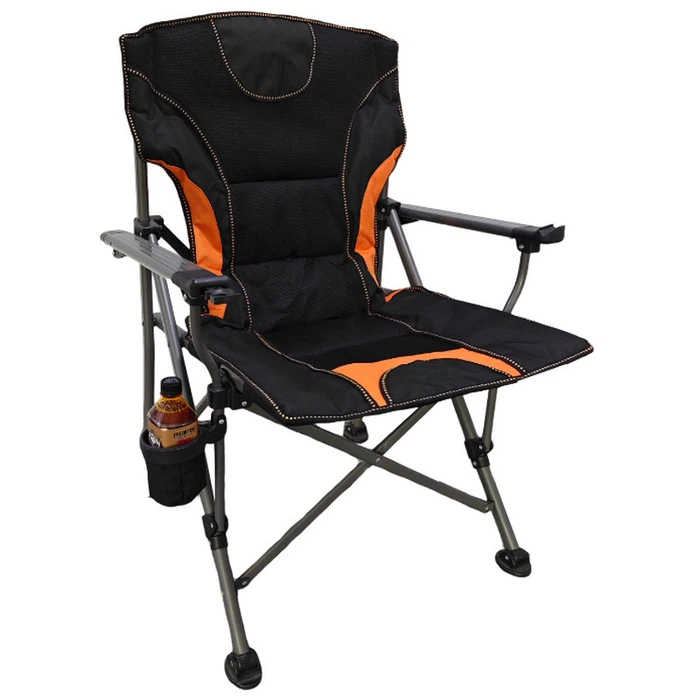
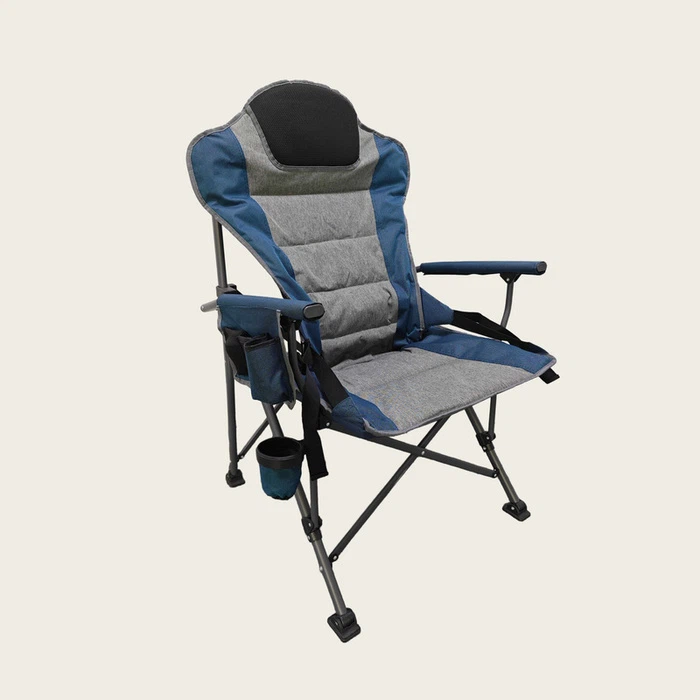
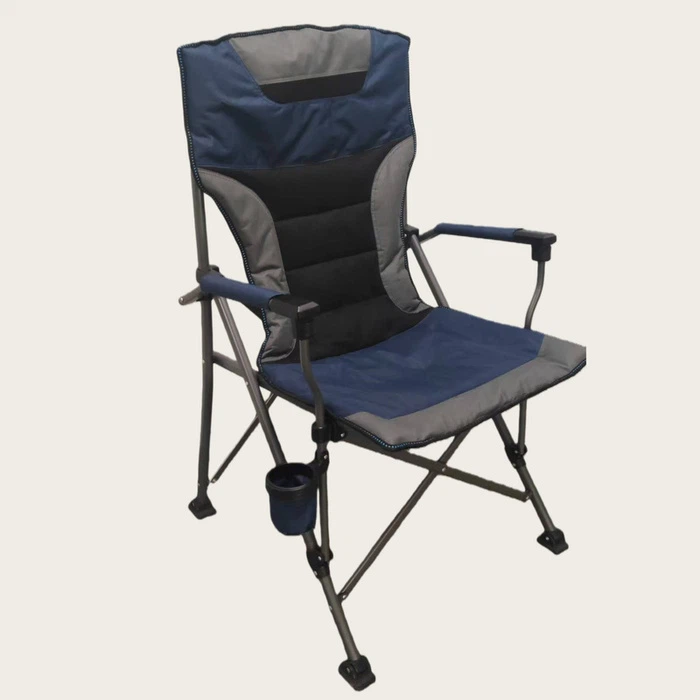
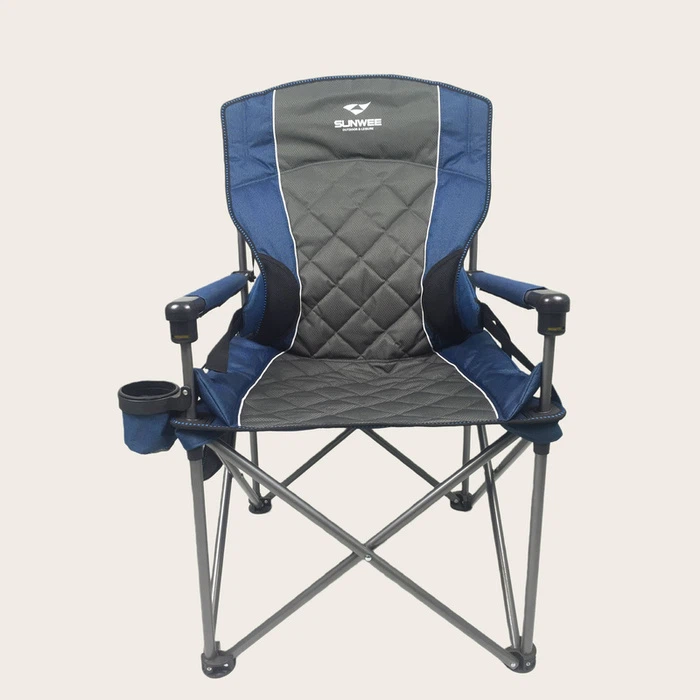
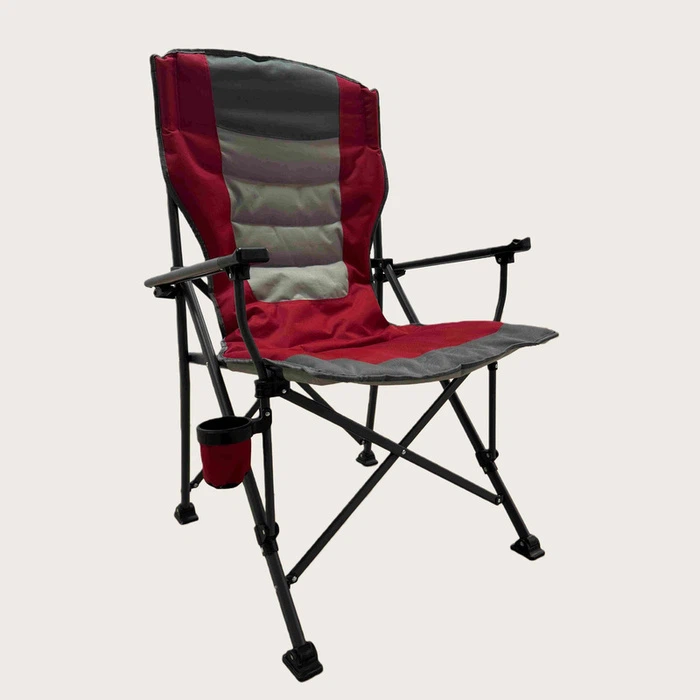
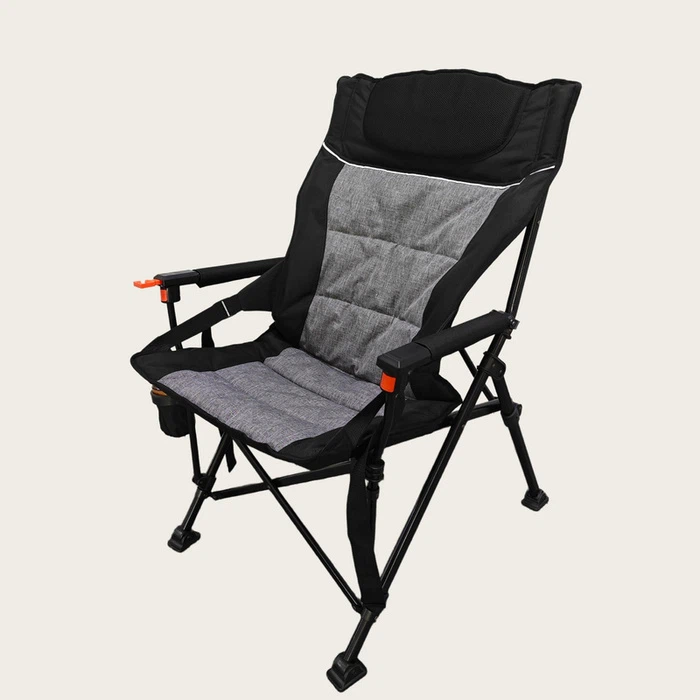
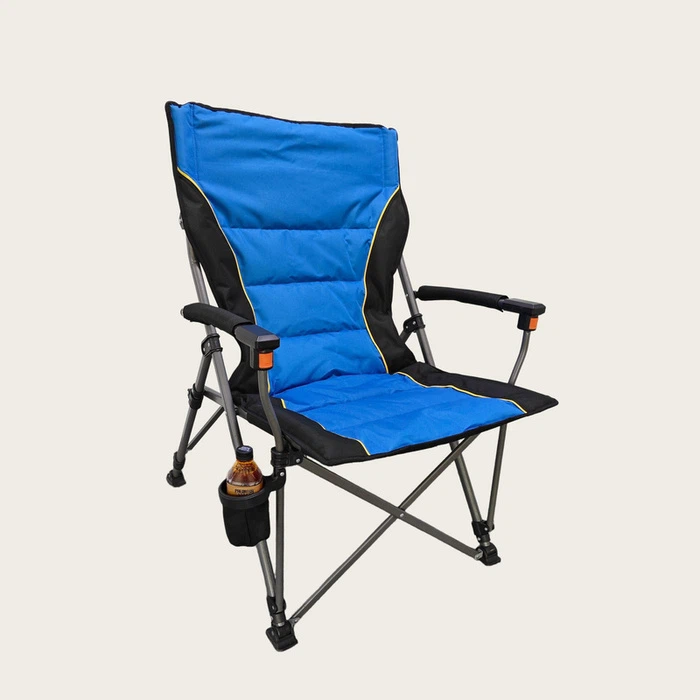
Traditional camping chairs rely on standard virgin polyester. Transitioning to sustainable camping furniture requires the utilization of Recycled Polyethylene Terephthalate (rPET) derived from post-consumer plastic bottles, or highly durable virgin Camping Chairs built with 600D Oxford fabric with a non-toxic water-resistant coating.
2. Metal Frames: Carbon Steel vs. Recycled Aluminum
The choice of metal directly dictates both the weight-to-strength ratio and the embodied carbon of the final product. High-grade 7075 aluminum alloy frames offer excellent weight savings and high recyclability, while precision-engineered carbon steel frames provide maximum weight capacity at an optimal cost point.
3. Surface Treatment: Powder Coating vs. Wet Painting
Wet paint releases Volatile Organic Compounds (VOCs) during the curing process. Professional manufacturing facilities utilize electrostatic powder-coating lines. This process is solvent-free, recovers overspray for reuse, and provides a highly durable, rust-resistant finish that prevents premature frame degradation.
4. Packaging Optimization and CBM Reduction
Optimizing the folding mechanism of Camping Tables and chairs reduces the flat-pack dimensions (CBM). Lower CBM allows more units to fit into a standard 40ft HQ container, lowering shipping costs and reducing the carbon footprint per unit transported. Additionally, replacing single-use plastic inner packaging with FSC-certified recycled cardboard or biodegradable PLA bags satisfies stringent European packaging waste directives.
|
Material Parameter |
Standard Industry Specification |
Sunwee High-Durability & Eco-Specification |
Sourcing & Sustainability Benefit |
|
Main Fabric |
300D/400D Polyester with PVC coating |
600D Oxford Fabric or rPET with PU coating |
Higher tear resistance; PVC-free reduces hazardous phthalates |
|
Steel Frame Tube |
13mm to 16mm diameter (0.8mm wall thickness) |
16mm to 22mm diameter (1.0mm - 1.2mm wall thickness) |
Increases dynamic weight capacity up to 300lbs - 400lbs |
|
Aluminum Frame |
Low-grade 6000 series aluminum |
7075 Aviation-grade Aluminum Alloy |
Outstanding strength-to-weight ratio; fully recyclable |
|
Surface Finish |
Liquid solvent spray paint |
Electrostatic non-toxic powder coating |
Zero VOC emission during production; high rust resistance |
|
Inner Packaging |
Virgin PE plastic bags with styrofoam inserts |
FSC-certified cardboard and pulp molds |
100% recyclable; compliant with EU Packaging Waste Directives |
Regulatory Compliance: Chemical Restrictions and Material Safety in Europe and North America
Global retail chains operating in Europe and North America must navigate highly stringent chemical safety regulations. Sourcing from an uncertified manufacturer exposes brands to massive legal liabilities, product recalls, and customs seizures.
Key chemical compliance frameworks include:
- REACH (Registration, Evaluation, Authorisation and Restriction of Chemicals): European Union regulation limiting toxic substances. Camping furniture fabrics must be tested to ensure they are free from heavy metals, phthalates, and Azodyes.
- POPs (Persistent Organic Pollutants): Restricting short-chain chlorinated paraffins (SCCPs) commonly used as flame retardants or plasticizers in outdoor fabrics.
- PAHs (Polycyclic Aromatic Hydrocarbons): Ensuring plastic feet, armrests, and rubber components do not contain carcinogenic PAHs.
A reputable outdoor furniture manufacturer maintains ongoing compliance by submitting material batches to third-party testing laboratories (such as SGS, TUV, or Intertek) for chemical analysis. Sourcing teams must demand valid test reports linked to the exact production batch rather than relying on outdated generic certificates.

Sourcing Strategies: How Retailers Should Audit Suppliers for Sustainability
When executing a factory audit or evaluating a new supplier during the bidding phase, procurement managers should move beyond superficial questionnaires. Use this technical checklist during factory evaluations:
- Request Valid Factory Certifications: Ensure the manufacturing plant has an active Certificates & Patents profile, including ISO9001 for quality management and a BSCI (Business Social Compliance Initiative) audit report with a rating of 'A' or 'B'.
- Verify Traceability of Raw Materials: Ask the supplier to provide material mill test certificates (MTC) for steel and aluminum batches, as well as Global Recycled Standard (GRS) certifications if they claim to use recycled polyester.
- Inspect On-site Quality Control Labs: A reliable supplier must possess an in-house laboratory equipped to conduct salt spray testing (for rust resistance), fabric tensile testing, and cyclic folding fatigue testing. This guarantees that Quality Control is integrated into every step of the manufacturing run rather than performed as an afterthought.
Turning Durability, Repairability, and Traceability into Retail Selling Points
For outdoor brands and retailers, partnering with a high-caliber manufacturer enables the creation of powerful marketing narratives that resonate with modern consumer groups. Instead of generic environmental slogans, marketing campaigns can highlight specific, verifiable structural features:
- Modular Component Design: Partnering with an OEM provider that supports modular design allows brands to offer replacement feet or fabric covers to end consumers. This promotes a circular economy model where a damaged part does not render the entire product obsolete.
- Traceable Sourcing: Highlighting certified material origins (e.g., GRS-certified fabric, FSC packaging) directly on the product hangtag or packaging box builds trust with discerning consumers.
- Lifetime of Performance: Utilizing high-durability specifications allows brands to confidently offer 3-year or 5-year warranties, justifying a premium retail price point and driving higher profit margins.
By leveraging our comprehensive OEM & ODM Service, global buyers can customize structural configurations, integrate recycled components, and optimize packaging sizes to match their exact sustainability targets.
Frequently Asked Questions (FAQ)
Q: How does Sunwee ensure that its recycled fabric components maintain the same tensile strength as virgin polyester?
A: We source GRS-certified recycled yarn and subject every fabric batch to rigorous warp-and-weft tensile strength testing in our on-site laboratory. Our 600D rPET fabric meets the identical tear-resistance standards (minimum 1200N force) as our standard virgin polyester, ensuring zero compromise on durability.
Q: Can your factory modify steel frame structures to comply with German PAHs testing and REACH requirements for plastic components?
A: Yes. All plastic feet, joints, and coatings used in our production lines are formulated with non-toxic, lead-free raw materials. We routinely supply European retailers with products verified by SGS and TUV to meet all REACH Annex XVII and PAHs Class 2 requirements.
Q: What is the minimum order quantity (MOQ) for custom sustainable packaging options like FSC-certified boxes?
A: For customized FSC-certified master cartons and biodegradable inner PLA packaging, our standard MOQ is 1,000 units per model. This aligns with our standard raw material extrusion and printing run limits to maintain optimum cost-efficiency for the buyer.