How to Prepare a Technical Specification Sheet for Custom Camping Furniture Projects
Sourcing heavy-duty, commercial-grade outdoor gear requires precise documentation. A detailed camping furniture specification sheet bridges the gap between your brand's vision and the factory's production floor. For global sourcing directors and procurement managers, submitting a vague Request for Proposal (RFP) often leads to multi-week communication delays, inaccurate pricing, and misaligned sample rounds.
When you partner with an experienced OEM camping furniture supplier, clarity accelerates timeline execution. Providing exact technical parameters ensures that initial engineering drawings match your cost-per-unit targets and structural performance requirements.
Dimensional Metrics and Core Performance Benchmarks
Every high-performance product begins with structural physical constraints. A complete specification sheet must define the product's spatial footprint and structural capacities to prevent misinterpretation during sample fabrication.
- Open Dimensions: Width, depth, and total height measured from the ground to the top of the backrest. Seat height must be isolated as an independent measurement to ensure correct ergonomic alignment.
- Folded Volume: Vital for evaluating shipping logistics and storage efficiency. Specify packed measurements including length, width, and thickness.
- Static Weight Capacity: Define the exact maximum load standard. Heavy-duty options typically require a certified weight capacity of 300 lbs or 500 lbs.
- Net Product Weight: The base weight of the item without retail packaging, critical for mobile outdoor product positioning.
Fabric Engineering: Material Densities and Technical Coatings
The longevity of a custom camping chair project relies heavily on textile selection. Standard consumer descriptions like "canvas" or "polyester" are insufficient for commercial procurement.
Denier and Weave Architecture
Specify the exact thread weight and weave style. Industrial outdoor applications utilize 600D Oxford fabric or 900D twisted polyester. For premium ventilation designs, opt for PVC-coated mesh combinations capable of resisting tear propagation.
Specialized Chemical Finishes
Protect your market reputation by dictating performance treatments. Your specification should outline requirements for polyurethane (PU) waterproof coating, UV-resistance inhibitors (such as a UV 50+ rating), and fire-retardant compliance matching destination market laws.
Structural Framework: Metallurgy, Thickness, and Hardware
The load-bearing framework represents the highest cost concentration in outdoor furniture production. Avoid structural failures by explicitly defining metallurgical attributes within your camping furniture RFQ documents.
Steel vs. Aluminum Alloy Comparison
Choose your structural base according to target weight limits and price structures:
|
Structural Parameter |
Heavy-Duty Carbon Steel Framework |
7075 Aircraft-Grade Aluminum Alloy |
|
Material Density |
Higher weight, ideal for base camp stability |
Ultra-lightweight, optimal for premium portable lines |
|
Standard Wall Thickness |
0.8 mm to 1.2 mm |
1.0 mm to 1.5 mm specialized profiling |
|
Surface Finish options |
Powder-coated rust-resistant finish |
Anodized oxidation layer / Matte blasting |
|
Corrosion Resistance |
Moderate (dependent on coating integrity) |
High natural resistance to marine or moist climates |
Mechanical Joinery and Consumables
Specify the hardware components that hold the frame under stress:
- Rivet Gauge & Composition: Hardened solid steel rivets with specific diameter requirements (such as 5mm or 6mm).
- Reinforcement Brackets: Thickened molded nylon or stamped steel washers situated at primary pivot junctions.
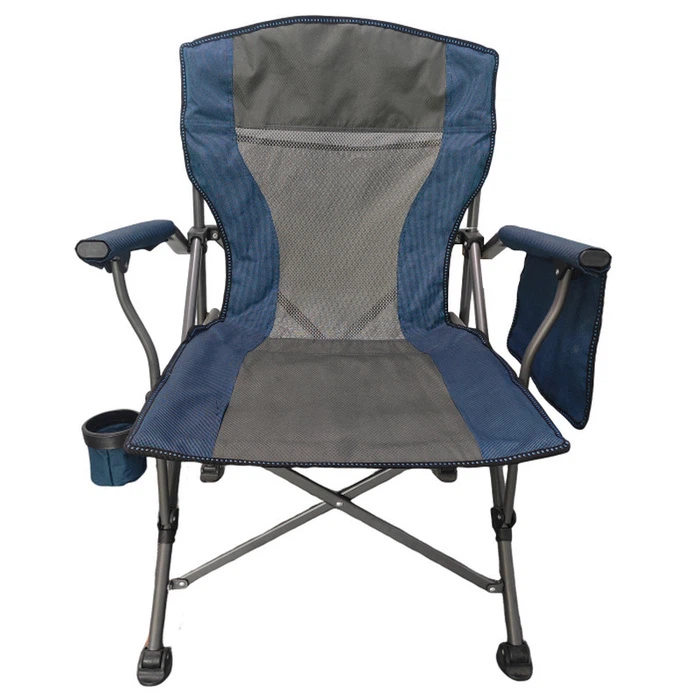
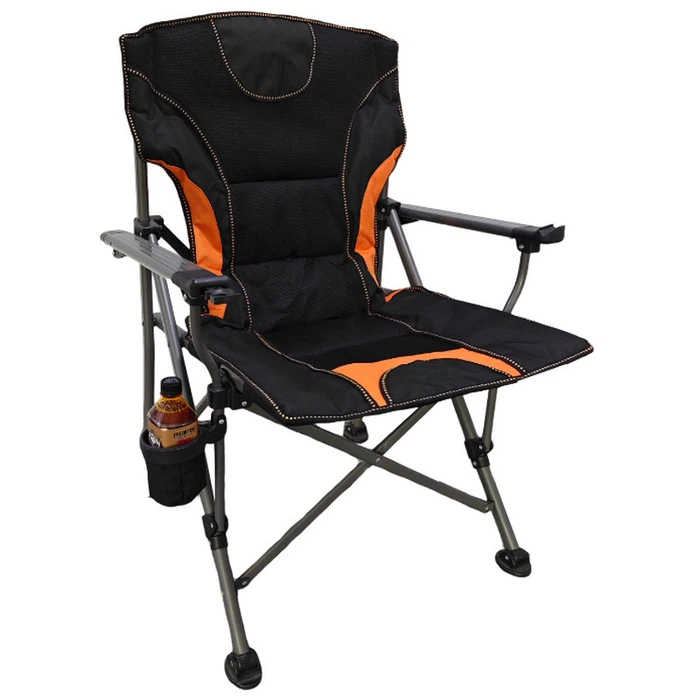
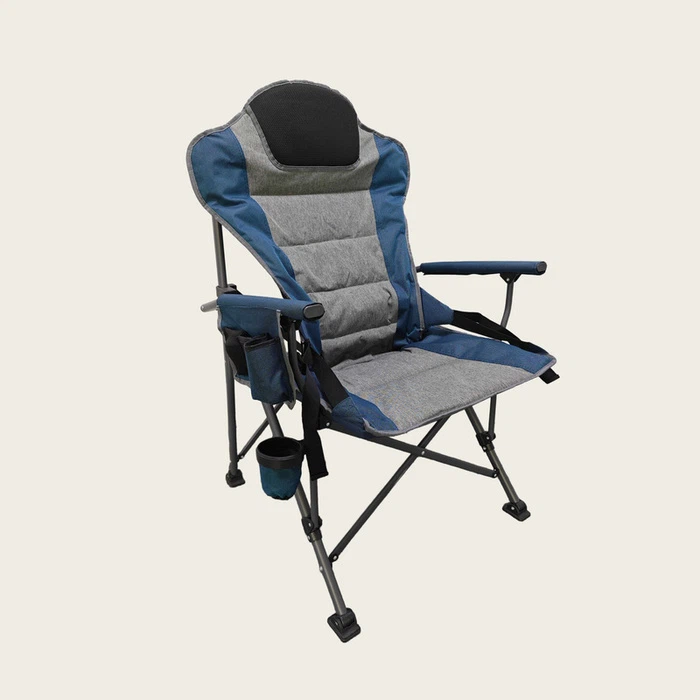
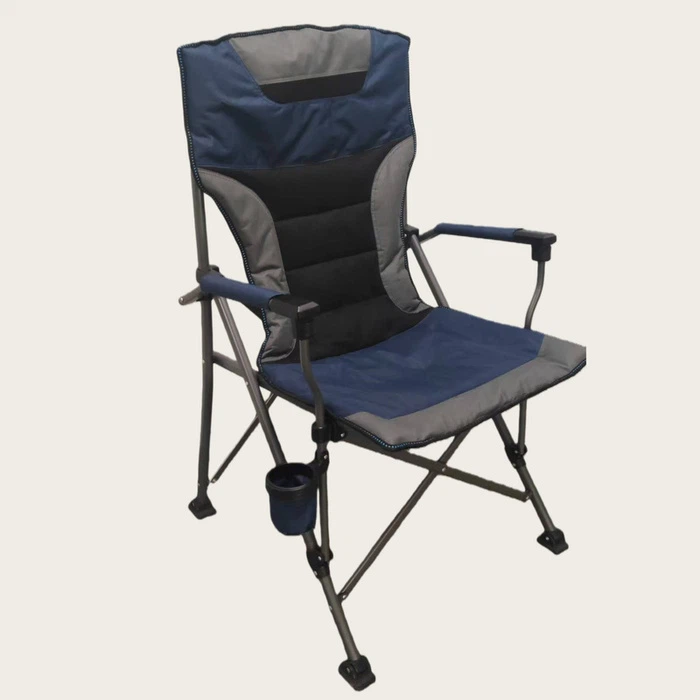
- Armrest Configurations: Specify structural inserts (such as integrated steel supports inside padded sleeves) or solid molded composite arms.
- Grip Components: Non-slip, wide-profile molded matrix foot plugs that stabilize the unit on loose sand or soft soil.
Packaging Protocols and Container Optimization Data
Defective factory packaging leads to retail damages. Your tech sheet must dictate packaging construction to protect items throughout global transit corridors.
- Primary Carry Bag: Specify fabric density (such as 300D or 600D Oxford), zipper gauge sizing, and reinforced cross-stitched carrying handles.
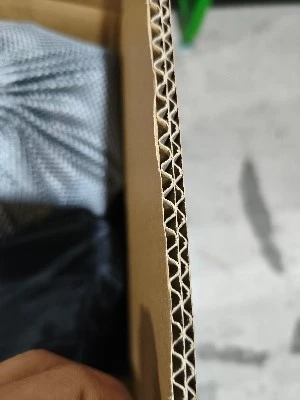
- Retail Inner Box: Define material structure-such as double-wall corrugated cardboard-along with high-definition litho-printing requirements.
- Master Export Cartons: Mandate heavy-duty 5-ply or 7-ply export shipping boxes that limit unit crushing.
- Container Cubage Layout: Require calculated CBM optimization metrics indicating estimated loading quantities for 40ft HC marine containers to maximize ocean freight efficiency.
Compliance Framework and Factory Auditing Rules
Your technical brief must highlight mandatory certification parameters. This protects your enterprise from custom clearing delays and product recalls.
As an experienced manufacturer, our manufacturing workflows are integrated directly into our core company framework, which includes specialized investments in Quality Control programs. Ensure your specification documents mandate the following baseline verification milestones:
- Social Compliance Verification: Validation from a BSCI audited facility to guarantee ethical manufacturing workflows.
- Structural Safety Protocols: Request static and dynamic stress load documentation certified via independent TUV and SGS testing labs.
- Chemical Inspections: Strict compliance with REACH or Prop 65 standards, ensuring zero heavy metal contamination within plastic moldings or surface paint applications.
Our dedicated R & D team utilizes these parameters to convert basic specification briefs into fully functioning prototypes that reliably clear international regulatory hurdles. To build your documentation accurately, you can also browse our baseline Camping Chairs collections or explore our full OEM & ODM Service capabilities to see how we adapt to rigorous brand requirements.
Product-Specific Technical FAQ
Q: What are the mechanical tolerances for your structural aluminum tubing?
A: Our 7075 and 6061 aluminum frame lines are engineered to a wall thickness tolerance of $\pm 0.05\text{ mm}$. This structural precision guarantees predictable execution during automated mechanical folding actions and prevents tube buckling under peak stress testing.
Q: Which specific waterproofing standard does your 600D Oxford fabric meet?
A: Our standard PU-coated 600D Oxford textiles achieve a hydrostatic head rating minimum of $1200\text{ mm}$. For high-exposure marine or extreme weather product positioning, our manufacturing lines can integrate premium coatings that deliver up to $3000\text{ mm}$ water column resistance.
Q: How do you prevent frame degradation and rust over long-term use?
A: All carbon steel frameworks pass through an automated multi-stage chemical wash and iron-phosphate pre-treatment system. They are then finished with a baked polyester powder coat averaging $60\text{ to }80\text{ microns}$ in thickness, ensuring superior resistance to salt spray and moisture corrosion.
If you are ready to move forward with a current project, you can also Contact Us directly to speak with one of our account managers.