Technical Auditing: Beyond Low Pricing in Camping Furniture Procurement

In the global outdoor gear market, procuring inventory solely based on low unit prices from online listing platforms often leads to high return rates, supply chain disruptions, and brand equity damage. For procurement directors, category managers, and CPOs representing major retail chains or premium outdoor brands, evaluating a camping furniture manufacturer in China requires a rigorous, data-driven methodology.
Price is merely a function of material grade, structural engineering, and manufacturing compliance. This guide provides an engineering-centric framework to audit potential partners, verify factory claims, and understand why structural integrity and regulatory compliance are the ultimate drivers of long-term profitability. Our target in high-end manufacturing is to optimize cost while maintaining flawless structural safety.
Key Verification Metrics for Outdoor Furniture Factories
To identify a truly reliable camping furniture supplier, procurement professionals must look beyond sales brochures. True manufacturing capability is defined by objective, verifiable operational metrics.
Factory Scale and Automated Production Capacity
An enterprise-grade camping chair factory in China must possess the infrastructure to handle high-volume seasonal spikes without compromising delivery schedules. When auditing a facility, verify the following operational baselines:
- Facility Footprint: Look for a minimum of 20,000 square meters of dedicated production and warehousing space to prevent cross-contamination of raw materials and finished goods.
- Daily Production Output: A reliable factory should average a daily output exceeding 10,000 folding chairs or tables.
- Machinery Fleet: High-capacity manufacturers rely on automated CNC pipe bending machines, automated powder-coating lines, and high-precision robotic welding arms. Manual welding and batch-type powder-coating ovens indicate small-scale operations with high risk of product variance.
Regulatory Compliance and Hard Certifications
A factory's certification portfolio is non-negotiable for entering regulated markets like North America and the European Union. Ensure the manufacturer holds current, verified audits:
- Social & Ethical Compliance: A valid BSCI (Business Social Compliance Initiative) audit report with a high rating (A or B).
- Quality Management: ISO9001:2015 certification ensuring structured document control and corrective action protocols.
- Product Safety Testing: Reports from independent labs such as TUV Rheinland, SGS, or Intertek proving compliance with EN 581 (European standard for outdoor leisure furniture safety and mechanical requirements) and REACH regulations.

Engineering Materials: Steel vs. Aluminum Alloys
The structural lifespan of camping furniture is dictated by its metal frame and fabric density. A professional outdoor furniture manufacturer in China must provide detailed material specifications rather than generic terms.
Metal Tubing Specifications
- Cold-Rolled Steel: Typically used for high-strength, budget-friendly designs. Look for a wall thickness of at least 0.8mm to 1.2mm with a rust-resistant powder-coated finish.
- 6000 and 7000 Series Aluminum: High-end lightweight gear, such as backpacking cots and ultra-portable chairs, must utilize aircraft-grade 7075-T6 aluminum alloy or 6063-T5 aluminum tubing. This material delivers an optimal strength-to-weight ratio.
Fabric Density and Tensile Strength
Avoid generic polyester. Specify:
- 600D Oxford Fabric: Double-threaded with a PVC or PU coating for water resistance and tear strength.
- Textilene Mesh: Specifically for high-humidity environments, offering breathability and UV degradation resistance.
|
Material Parameter |
Standard Steel Tubing |
6063-T5 Aluminum Alloy |
7075-T6 Aluminum Alloy |
|
Average Wall Thickness |
1.0mm – 1.2mm |
1.2mm – 1.5mm |
1.0mm – 1.3mm |
|
Corrosion Resistance |
Moderate (Requires powder coat) |
High (Anodized/Powder coat) |
Superior (Anodized) |
|
Weight-to-Strength Ratio |
Standard |
High |
Extreme |
|
Typical Product Application |
Heavy-duty camping chairs |
Folding picnic tables |
Ultra-light backpacking cots |
|
Target Load Capacity |
Up to 136kg (300lbs) |
Up to 110kg (240lbs) |
Up to 150kg (330lbs) |
Verifying OEM/ODM Engineering Capabilities
For brands seeking custom product lines, a factory's engineering team is more important than their catalog. A high-tier OEM partner must have an in-house R&D department equipped to translate concept sketches into retail-ready physical products.
The Mold-Making and Prototyping Pipeline

A structured development process prevents expensive field failures. Ask potential suppliers to define their prototyping timeline:
- 3D CAD Rendering & FEA (Finite Element Analysis): Testing structural stress points digitally before cutting metal.
- 3D Printed Mockups: Verifying plastic joints, brackets, and locking mechanisms.
- In-House Tooling & Mold Workshop: True OEM specialists design and cut their own plastic injection molds. This reduces development lead times from months to weeks.
For comprehensive details on custom design integrations, review our dedicated OEM & ODM Service capabilities page.
Operational Flow: Inquiries, Sampling, and Quality Control
To guarantee container-load consistency, a standardized manufacturing and quality control workflow must be maintained across all batches.
The 4-Stage QC Protocol
- IQC (Incoming Quality Control): Verifying the tensile strength of incoming steel coils, fabric denier, and polymer raw material lots before production begins.
- IPQC (In-Process Quality Control): Hourly checks on welding seam integrity, cutting tolerances, and powder coat thickness (measured in microns).
- FQC (Final Quality Control): Mechanical assembly testing of 100% of finished units from the production line.
- OQC (Outgoing Quality Control): Random sampling based on standard AQL 2.5/4.0 guidelines before loading containers.
To learn more about our testing parameters, visit our Quality Control protocol breakdown.
Why Sunwee is the Strategic Partner for Global B2B Buyers
Established in 1997, Fujian Sunwee Outdoor Co., Ltd. has spent nearly three decades refining its position as a premier camping furniture manufacturer in China.
Verified Factory Infrastructure
Our modern production facility is fully audited to meet the highest global standards. We hold active certifications including ISO9001, BSCI, TUV, and SGS. Operating as a direct-to-source manufacturer allows us to eliminate third-party trading markups, giving our global partners a distinct competitive edge.
Comprehensive Product Portfolio
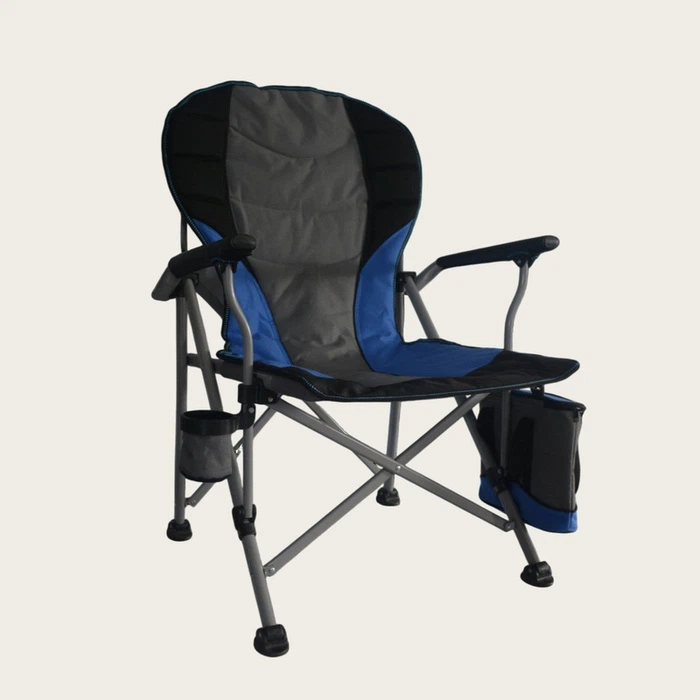
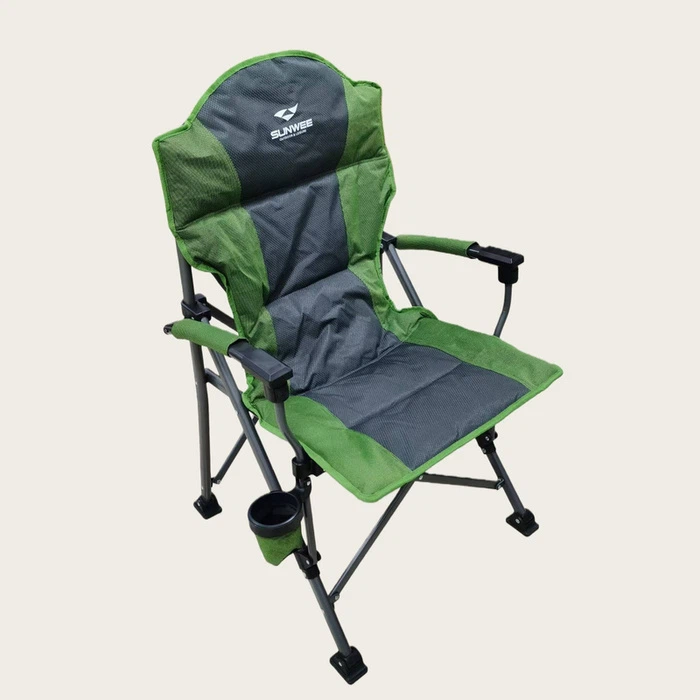
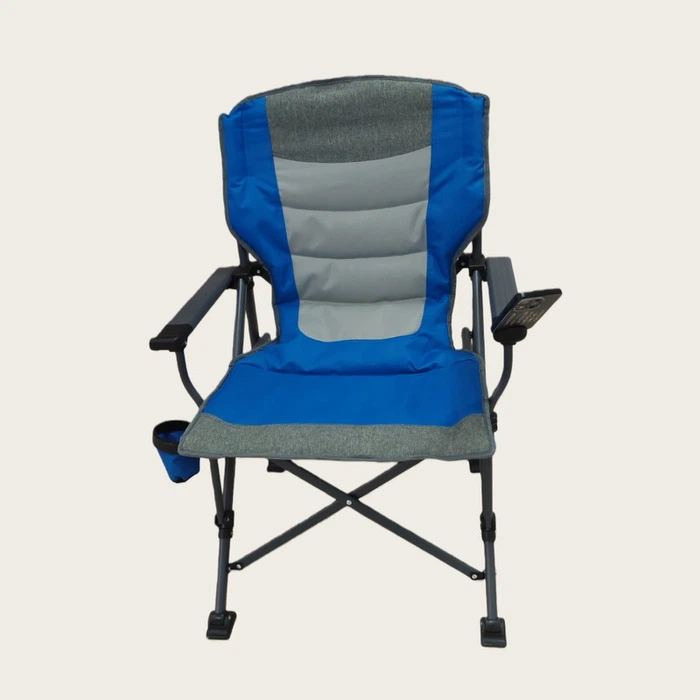
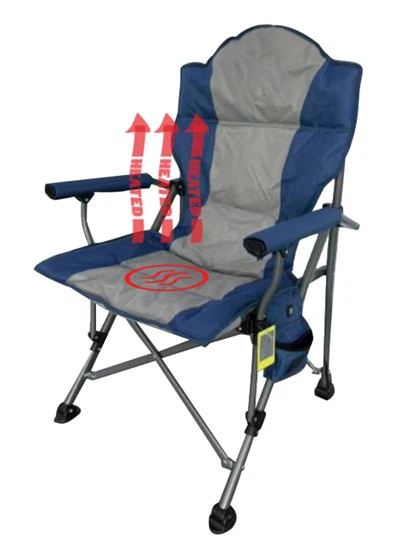
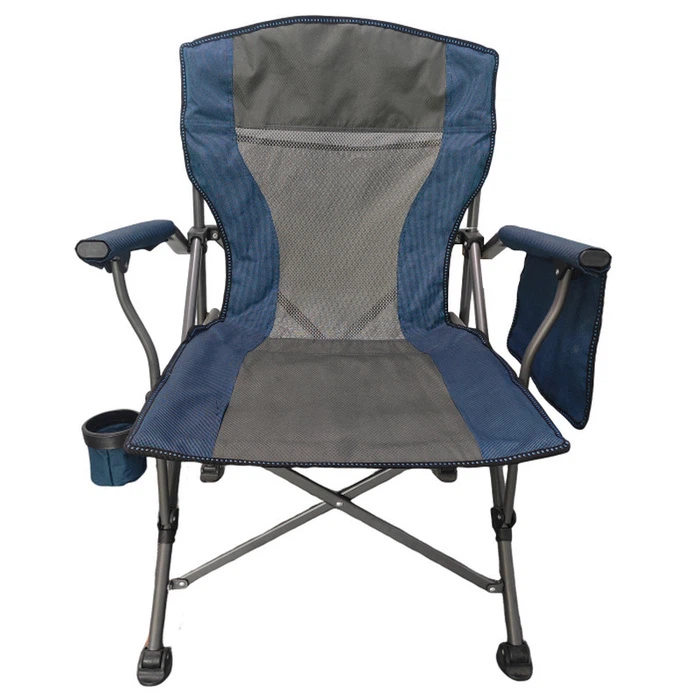
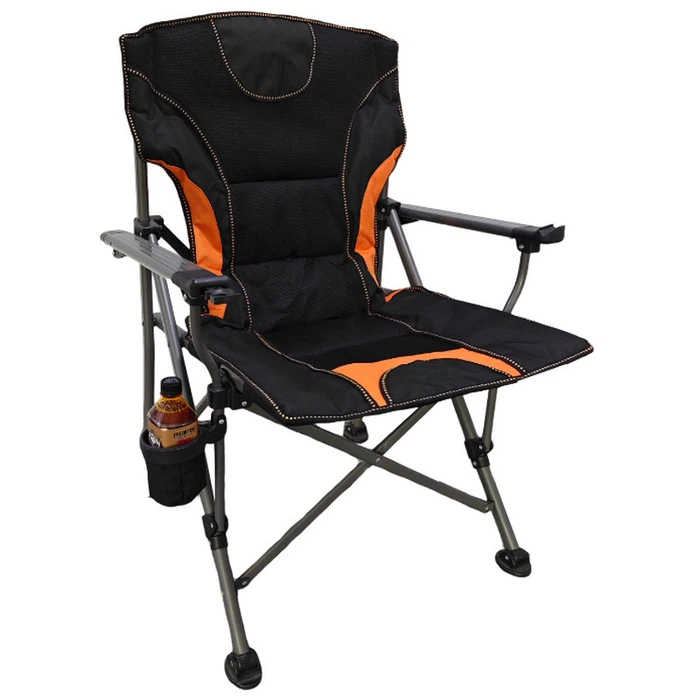
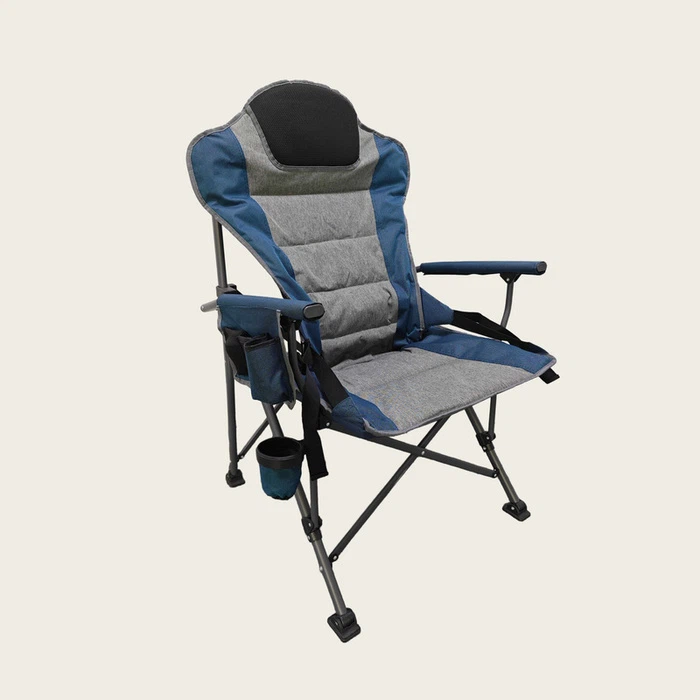
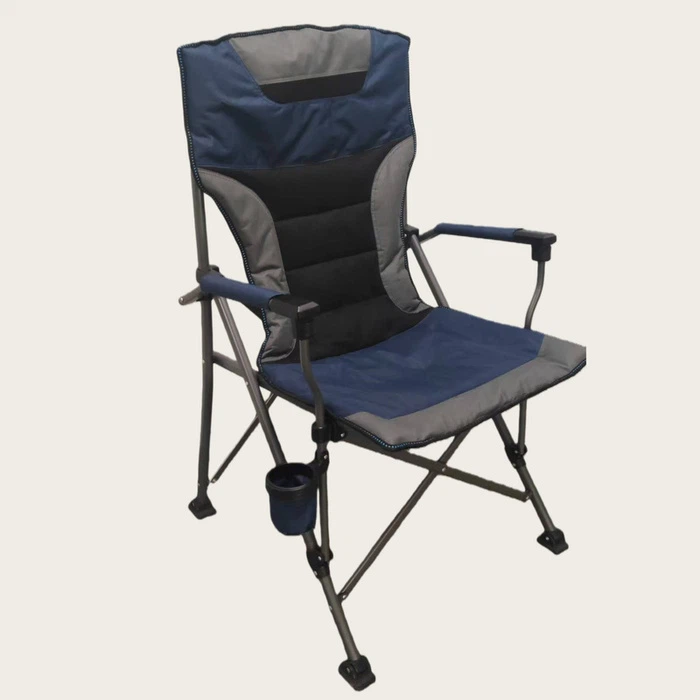
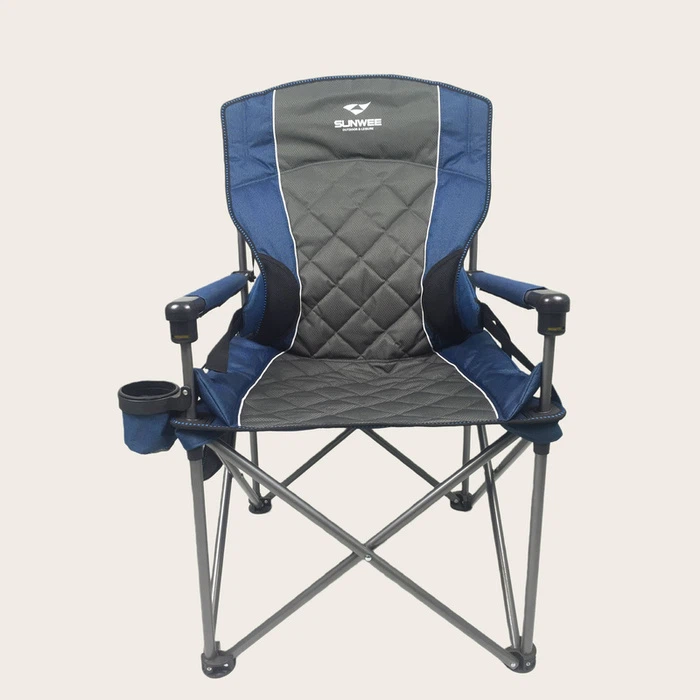
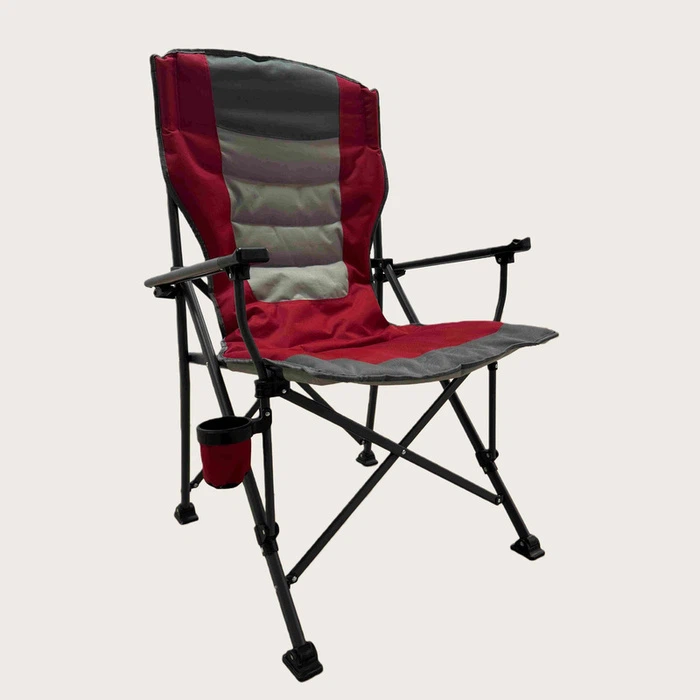
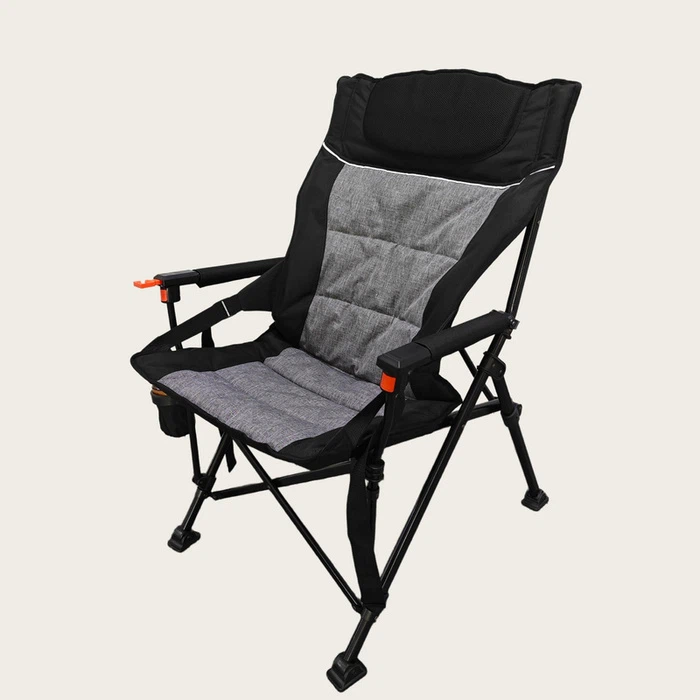
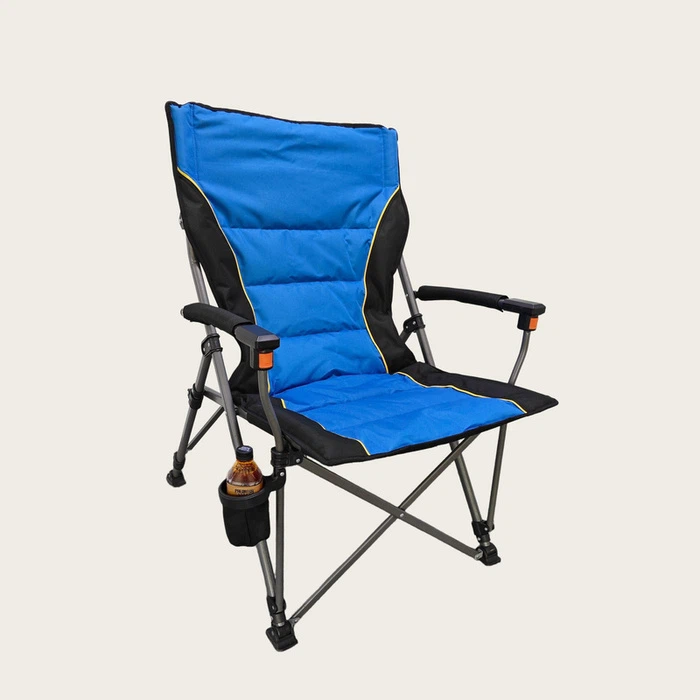
From high-capacity Camping Chairs and structural Cots to lightweight folding Tables and organized Cupboards, our integrated production lines handle diverse product categories under one roof. Our extensive export history spans major retailers across North America, Western Europe, and East Asia, ensuring our logistics team is fully versed in complex import compliance, palletization, and sea freight optimization.
Explore our manufacturing origins and historical milestones on our Company Profile page, or view our compliance database via our Certificates & Patents registry. To finalize commercial terms, please use our Contact Us page.
Technical and Structural FAQ
Q: What specific steel alloy grade does Sunwee use for high-load capacity camping chairs, and what is the tube wall thickness?
A: We utilize high-tensile Q195 cold-rolled steel tubing with an outer diameter of 16mm or 19mm and a wall thickness of 1.0mm to 1.2mm. This setup is paired with a heavy-duty powder coating to ensure each chair easily passes static load tests up to 300 lbs (136 kg) without structural deformation.
Q: How does Sunwee ensure the double-stitched 600D Oxford fabric does not tear at critical stress points near the frame joints?
A: We apply high-strength reinforced webbing patches at all frame connection points. The fabric panels are secured with heavy-duty nylon thread double-stitching (with a density of 8-10 stitches per inch) and fastened using solid steel rivets rather than hollow pins to distribute localized tension evenly.
Q: What is the standard production lead time for a 40-foot High Cube (40'HQ) container of mixed camping furniture, and what is your MOQ?
A: Our standard production lead time is 35 to 45 days from deposit confirmation and technical pack approval. For repeat orders, this can be optimized. Our standard Minimum Order Quantity (MOQ) is 1,000 pieces per model for standard colors, allowing for efficient material allocation and automated manufacturing scheduling.